
Why Montessori?
At its heart, the Montessori approach honours the natural wisdom of every child.
Instead of pushing children to conform to a fixed system, Montessori education trusts that learning unfolds best when it follows the child’s rhythm — not the adult’s agenda.
Developed by Dr. Maria Montessori over a century ago, this philosophy is not just a method. It’s a mindset.
this approach respects the natural rhythm of each child’s development. It offers calm structure, gentle guidance, and prepared environments that support growing independence, focus, and confidence.
Montessori gives children the gift of doing things for themselves, and gives parents the tools to step back with trust,
‘The greatest gift we can give our children is the freedom to be themselves — to live in a world prepared for their independence, not our control.’
Maria Montessori

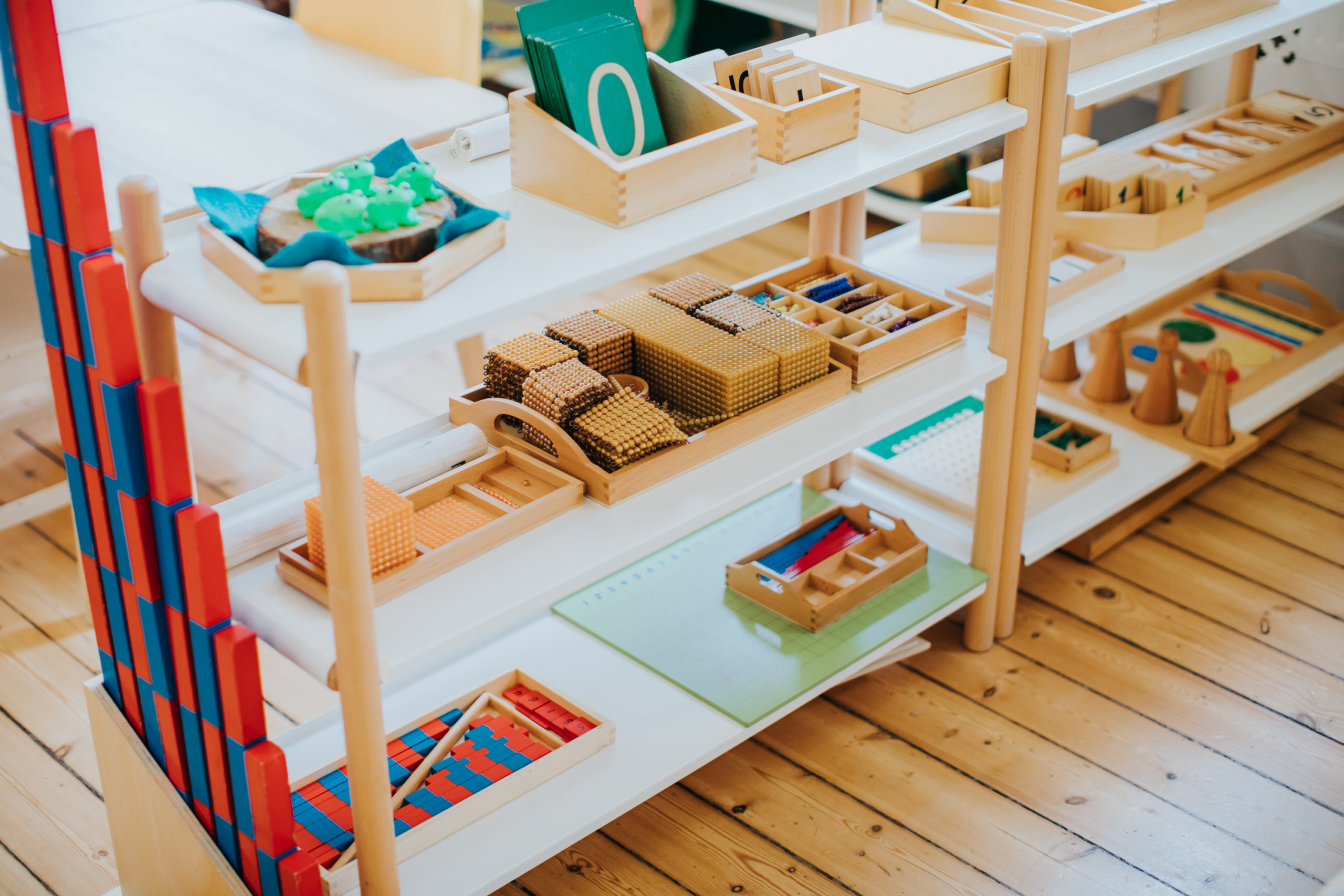
Key Principles of Montessori
Children are encouraged to do things for themselves — from dressing to helping at mealtimes. These daily moments build confidence and self-belief.
At the heart of Montessori education lies deep respect for the child as a capable, curious, and unique individual.
We believe that children thrive in an environment that nurtures their independence, encourages exploration, and supports learning through real-life, hands-on experiences.
Guided by the child’s natural rhythm and interests, the Montessori method fosters concentration, confidence, and a lifelong love of learning.
Activities – Independence
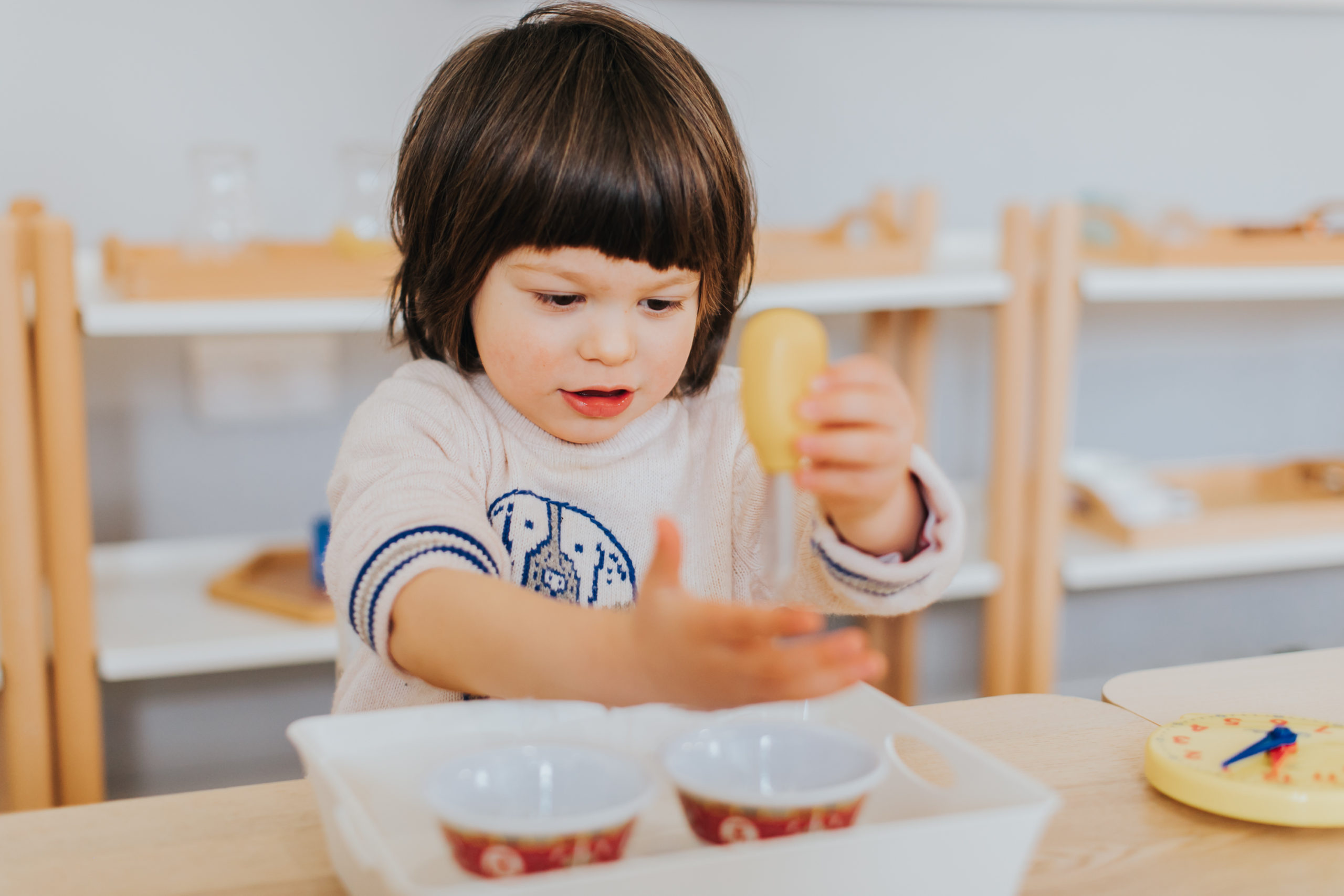
Practical Life activities are the foundation of Montessori, and they don’t require special materials. You’ll find them in the kitchen, at the sink, by the front door. They’re buttoning coats, preparing snacks, folding clothes. These real life tasks:
-
Develop focus and coordination
-
Strengthen hands for writing
-
Build emotional regulation through repetition
-
Increase confidence through mastery
The activities in this area develop wrist dexterity, pincer and tripod grip that are all necessary for learning to write. At home, invite your child into everyday routines. Let them help. Let it be slow. Let them lead.
Sensorial Area
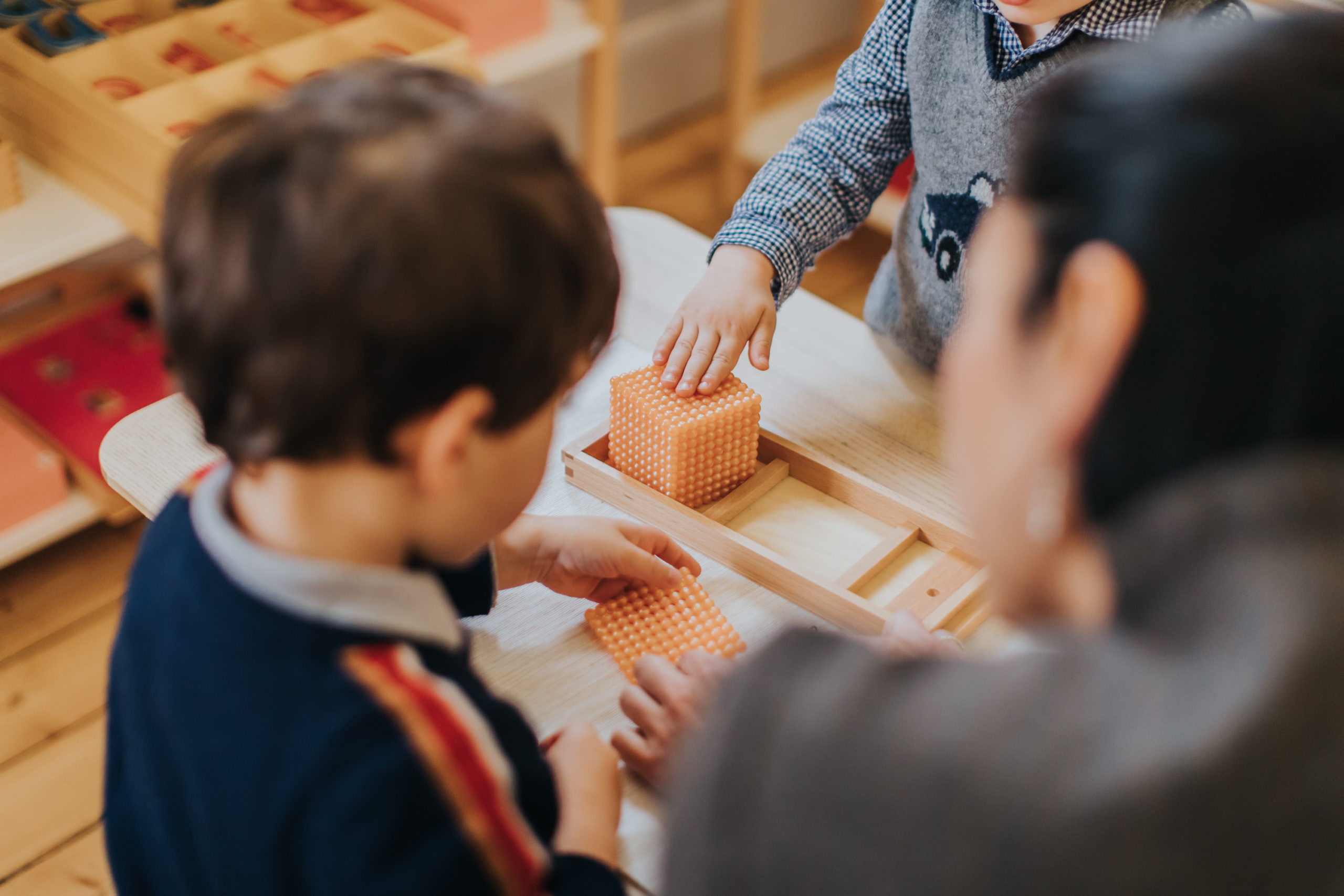
Dr. Montessori discovered that ordering, comparing and classifying sensory stimulation is greatly beneficial for the child’s intellectual development. Abilities such as perception, basic problem solving and abstract learning are aided through such activities. This area is also a vital area for the child’s preparation for mathematics.
Sensorial work helps children refine their perception — of colour, shape, texture, size, sound, scent. It builds attention, memory, and classification. You can offer this at home by:
-
Letting them touch fabrics, pour water, play with textures
-
Naming attributes: rough/smooth, loud/quiet, heavy/light
-
Trusting their deep need to repeat
Sensorial play is the child’s way of making sense of the world.
Early literacy
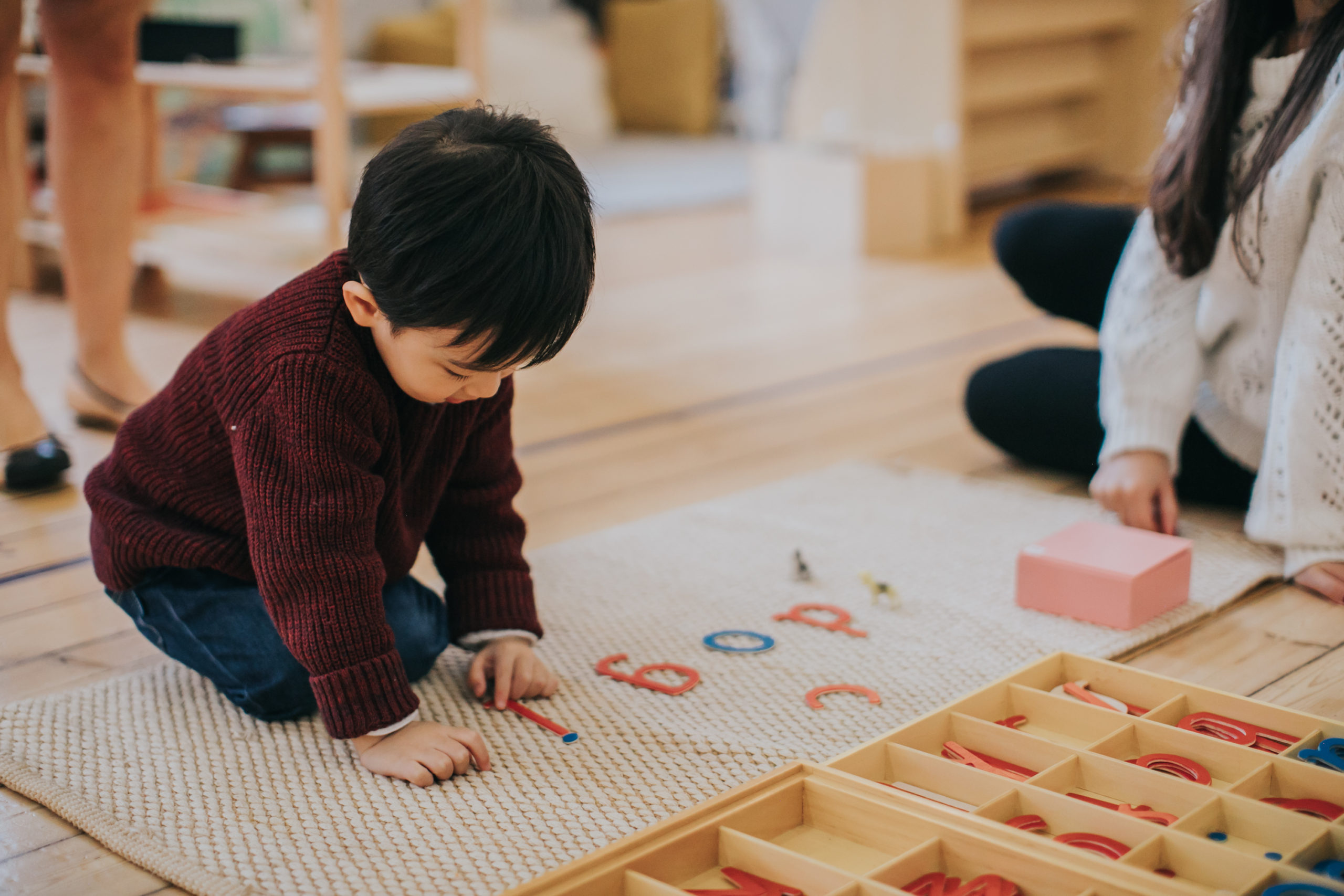
Montessori doesn’t rush children into reading or math — it builds the foundation first. There are many ways to support Early literacy at home Songs, poems, finger games and pre-literacy games help the children to enrich their vocabulary and to begin recognising individual sounds. Early numeracy (math) is an area that introduces abstract concepts to children. In your home, you can support this without the materials in many different ways. Some include:
-
Singing songs, playing rhyming games, reading aloud daily
-
Naming sounds gently (“/s/ is for sun”) without pressure
-
Exploring math through pouring, sorting, pairing, cooking, and measuring
Early literacy and numeracy are everywhere — in your voice, your home, your shared moments.
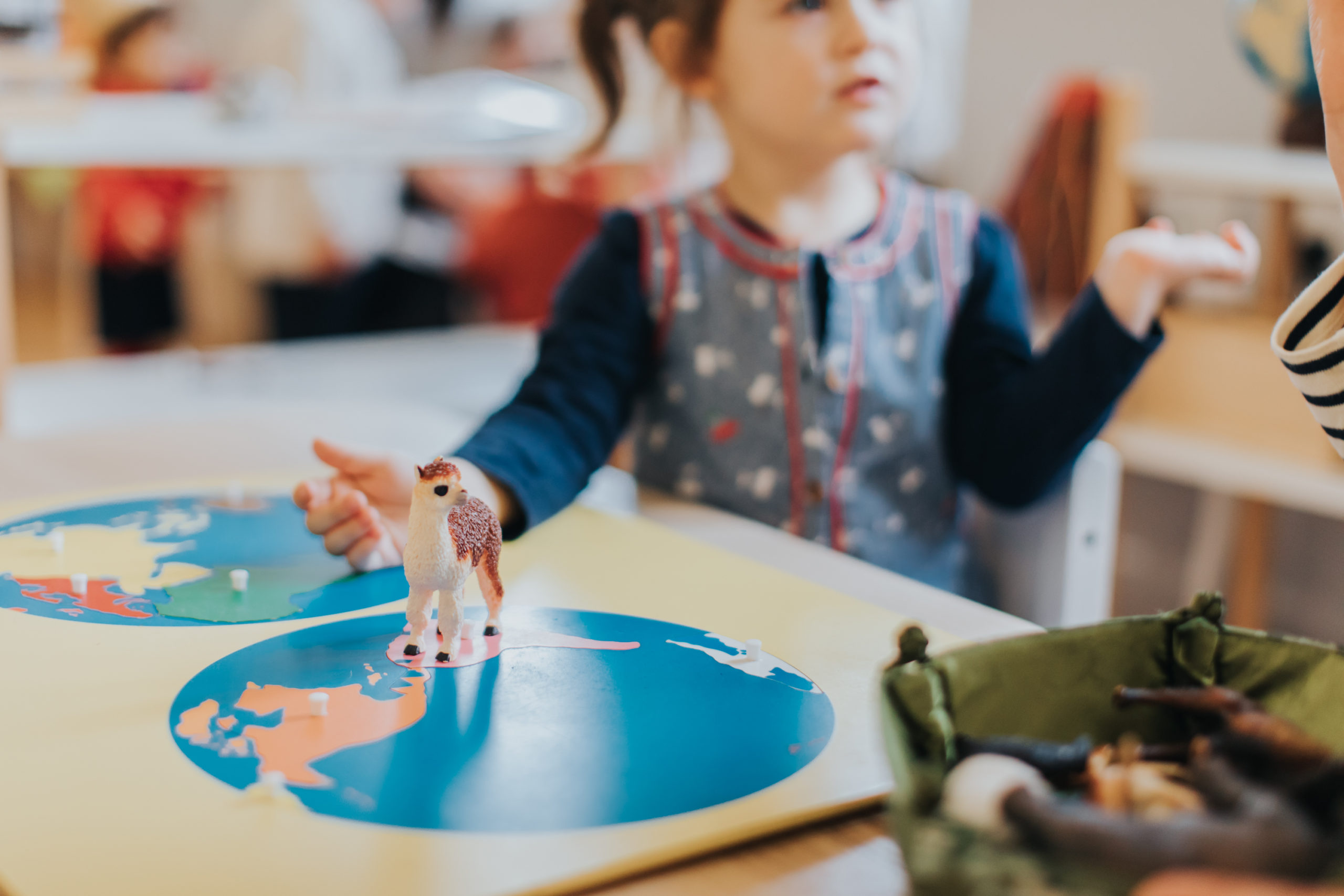
Understanding of the world
Knowledge and Understanding of the world allows kids to explore the natural and social world around them. It’s a vast and inclusive area. Geography, Zoology, Botany, History and Science are some of the leading themes.
Children are natural explorers — everything is new to them. Montessori nurtures this curiosity through hands-on, sensory experiences. At home, you don’t need a curriculum. You just need to stay curious together:
-
Name plants in the park
-
Explore animal facts over breakfast
-
Talk about cultures, countries, and your own family roots
The world becomes a classroom when you slow down and wonder aloud together.
Curious How To Bring Montessori At Home?
Explore upcoming events
Follow Us
Stay in touch with us.
© 2026 My Montessori School London